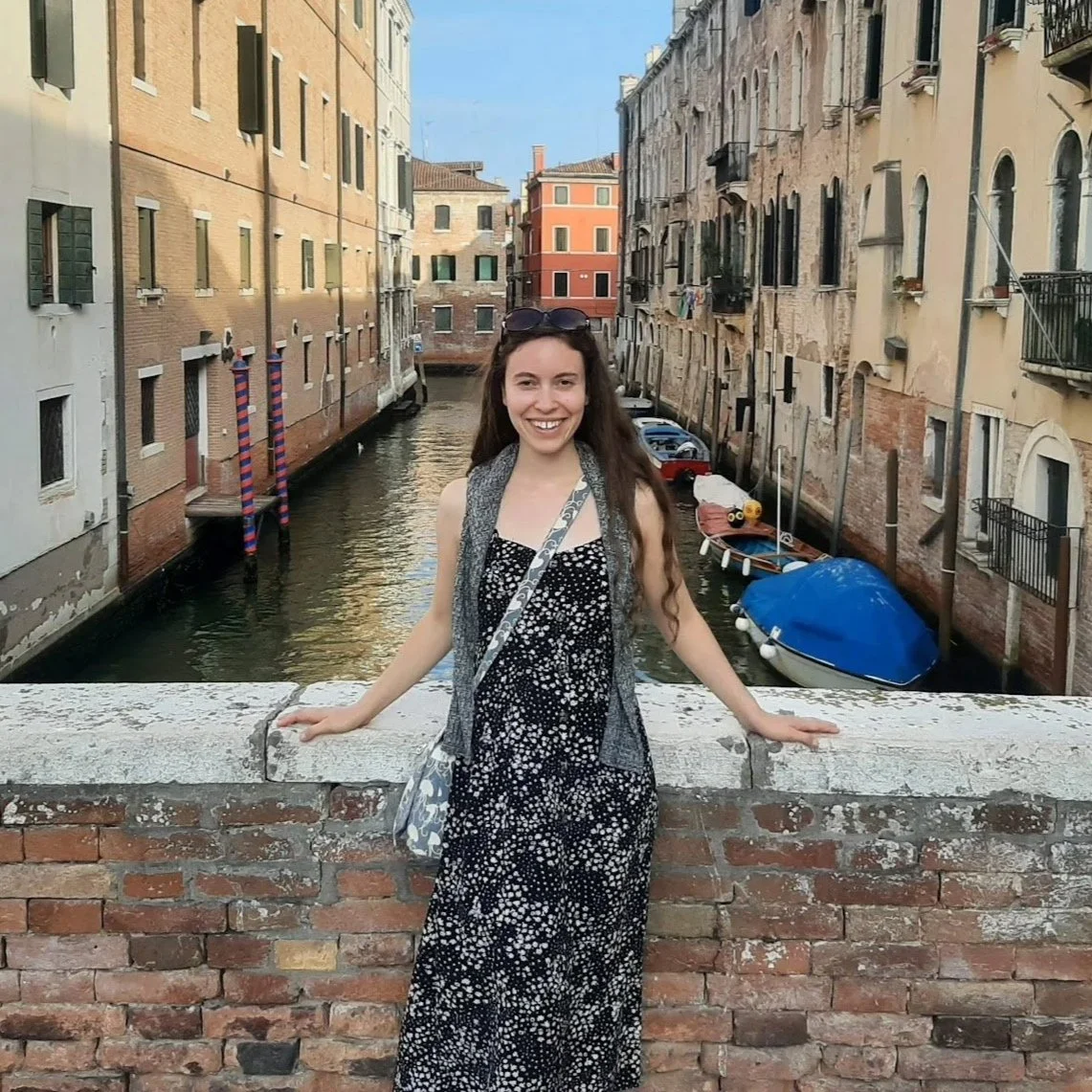
Astrid Sorflaten
I’m a life design coach working primarily with neurodivergent women. Non-coincidentally, I’m also an AuDHDer with PDA and a healthy dose of childhood trauma. I was late diagnosed and identify as high-masking.
“Doing life better” has always been a special interest for me, in the most autistic sense. I light up when I get to talk about neurodivergence, and the creative and joyful ways that we can learn to thrive in harmony with our unique, beautiful brains.
Coaching, for me, is a calling. I don’t believe there is one “right” career for anyone, but I can’t help feeling that this is the work I’m on this planet to do.
When I’m not working, you can usually find me reading, writing, hiking, or snuggling up with Penguin, objectively the handsomest of all tuxedo kitties.
Why Me? My Story
I really, really struggled in early adulthood. I was doing a huge amount of processing, self-exploration, and all the "right" things to recover from childhood trauma and build a healthy adult life for myself, but it felt like I was spinning my wheels. My life as a whole never got any better.
When I discovered the concept of life design, in particular creating a wheel of life and pulling everything together into a cohesive life vision, things changed basically overnight.
Suddenly, the different areas of my life weren't fighting against each other. I regained a sense of hope and empowerment, and a belief that my life was going to keep getting better and better, under my own agency — something I hadn't felt since childhood. That deep confidence has stayed with me since then, even through the darkest periods.
It didn't sort my whole life out. Of course not. That's the work of a lifetime! But I felt like I was consistently moving in the right direction, and I had a powerful confidence that my life would continue to get better and better, never worse or even stagnant — and I can confirm that it has, on so many different levels, from career, to relationships, to emotional wellbeing, to finances.
The transformation was so profound that I trained to coach Mindvalley's Lifebook program, and I've been coaching ever since — running group cohorts, working 1:1 with neurodivergent women, and even integrating executive and productivity coaching into my day job leading operations at high-impact non-profits.
I had the joy of seeing many beautiful humans have a similarly profound experience, but I quickly realised that a goal-oriented approach didn't work for everyone. Clarity is great, but many neurodivergent folks were completely unable to take action on their goals, no matter how aligned they were. I myself noticed a heightened sense of pressure and paralysis, the more I focused on my goals.
It was during this period that I developed the concept of a life compass: moving away from goals, and towards a values-based orientation system. I learned to work with my beautiful neurodivergent brain instead of against it, and helped others do the same. My life became softer, more joyful, and fundamentally easier.
A life compass doesn't stop things from going wrong. I had one of the darkest periods of my life at the start of last year, due to circumstances outside of my control. In the past, something like that would have floored me for years. But even within that dark place, I had my life compass to come back to. And when I was ready to come back to life, I didn't have to rebuild anything — my life compass was right there, ready to guide me.